Stop White-Knuckling 'Understanding' — It Was Never Yours to Hold Onto
Anthropic's internal analytics went from 21% to 95% accuracy with zero model improvement. What that means for where AI moats actually live—and why you're fighting for the wrong layer.
Product leader & founder, Product Manager Hub
Writes on product strategy, AI decision quality, and PM leadership—grounded in real operating experience, not generic AI takes.
Key takeaways
- Anthropic's 21% → 95% accuracy improvement came from definition and governance, not model quality, proving semantic understanding is commoditizing while structural knowledge remains defensible.
- Three durable moats exist beyond semantic understanding: context ownership (proprietary definitions and edge cases), trust infrastructure (validation and audit trails), and workflow embedding (daily habit formation).
- Most product leaders are white-knuckling model access when the actual defensible work is in the definition layer—metric meanings, governance, and institutional judgment that vendors cannot rent you.
what you're actually afraid of
The fear is legitimate. Vendors are getting genuinely better at semantic comprehension. Claude's fluency is real. The accuracy jumps are real. When you feed an LLM your company's data with clear guardrails, it can surface patterns your analysts missed.
But here's what Anthropic's own numbers revealed: they supplied the least valuable 21%.
The jump from 21% to 95%? That came from metric definitions, governed semantic layers, workflow encoding, and validation. Not from a better model. Not from more training data. From the unglamorous work of defining what the metrics mean in the first place.
This is the moment the fear should pivot.
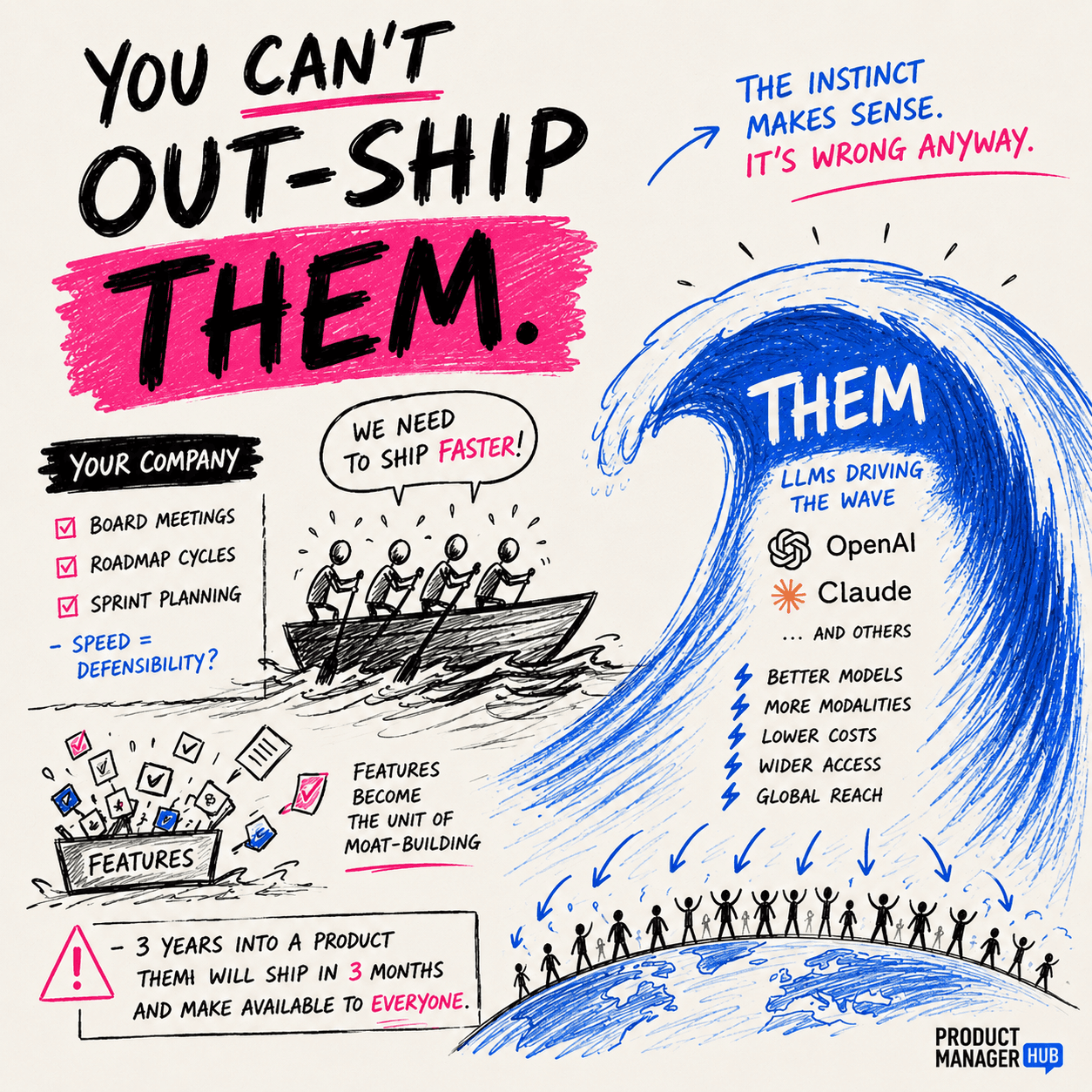
You've been watching vendors get better at understanding. What you should be watching is vendors getting better at reflecting back the definitions you haven't built yet. They're not stealing your moat. They're exposing that you never built one.
the 21% is the least valuable thing in the stack
Let's be precise about what "understanding" decomposes into, because vendors are counting on you confusing the layers.
Layer 1: Fluency (the 21%)
The LLM can read text, recognize patterns, generate prose that sounds like it knows what it's talking about. This is where vendors pour their capital—bigger models, better training, shinier demos. This layer commoditizes. It has to. Everyone gets access to it.
Layer 2: Definition (the 79%)
Metric definitions. Why "active user" means different things in different contexts. Your edge cases. The institutional memory of why the data is shaped the way it is. Governance rules. Semantic mapping. The validation infrastructure that makes an answer trustworthy enough for a board meeting or a regulatory audit. Workflow encoding—where in daily operations this output actually lands and changes behavior.
Vendors cannot commoditize this. Not without moving into consulting. Not without becoming you.
The 95% accuracy Anthropic achieved wasn't "Claude got smarter." It was "we finally built the definition layer, and now even a good LLM can reflect it back correctly."
So the question isn't: are vendors going to understand my business better than I do?
The question is: are we going to define what we mean by our own business before vendors have to guess?
why this fear feels true (even though it's strategically misplaced)
LLMs are fluent. That fluency is seductive. When Claude reads your data and surfaces an insight, it sounds like understanding. It sounds intentional. It sounds like the system knows what it's doing.
That sound is exactly why vendors have economic incentive to blur the layers.
"Understanding-as-a-service" sells better than "we're a very good typist for your semantic layer." So vendors will keep framing their fluency as comprehension, and you'll keep white-knuckling model access, terrified that the semantic layer is evaporating.
But semantic understanding isn't evaporating. It's being outsourced. And you're letting it happen in the layer where it matters least.
The trap: you're defending the wrong perimeter.
You're fighting to keep proprietary advantage in fluency—the layer that will be commoditized within two years. Meanwhile, the actual load-bearing work—definition, governance, validation, workflow embedding—sits completely undefended underneath.
Most organizations aren't losing their moat to AI vendors. They're discovering they never built one.
where the moat actually lives (and it's not where you think)
The reframe lands here. There are three durable layers where moats actually survive the commoditization of semantic understanding.
context ownership
Your metric definitions. The edge cases nobody wrote down. The institutional memory of why the data is shaped the way it is. Why "churn" means something different in your company than it means in the company down the street. Why you measure "success" through three dashboards instead of one. The history of decisions that led to today's schema.
This is a real moat. It's defensible. It's yours.
But—and this is crucial—it's replicable. A vendor with time and access could build the same definition layer you did. A competitor with the same data could discover the same patterns. This moat is durable only as long as you're the only one doing the definitional work.
Most organizations aren't doing the definitional work. That's why it's still a moat.
The diagnostic: Do you know what "active user" means without checking three dashboards? If you have to ask two other people how to calculate it, you don't own context. You're renting it.
trust infrastructure
Validation. Provenance. Audit trails. The ability to explain why the system said what it said, not just that it said it.
Probabilistic output never satisfies audit-grade requirements. Your CFO doesn't care how good your LLM is—they care about the paper trail. Your compliance officer doesn't care about model accuracy—they care about reproducibility. Your board doesn't care about fluency—they care about defensibility.
This moat is permanent. Not because vendors can't build it—they can—but because vendors can't commoditize it. Trust infrastructure is bespoke by definition. It lives in your systems. It's embedded in your governance. It's non-transferable.
Once you build it, it doesn't leave. Even if you swap LLM vendors tomorrow.
The diagnostic: If you switched to a different model tomorrow, would you lose anything real, or just swap the fluency layer?
workflow embedding
The most underrated moat of the three.
If your product is the thinking partner in daily workflow—the tool people reach for without thinking because it's just there in their flow—you win. Not because your model is better. Because habit is sticky. Distribution is sticky. Integration is sticky.
Users don't abandon the thinking partner that lives in their daily work because a better model ships. They abandon tools that live in a separate tab, no matter how good the model is.
This moat is durable, and it's durable for a reason vendors can't easily overcome: it requires doing the boring work of integration and workflow mapping, not the exciting work of model training.
The diagnostic: Where are your users actually thinking? Are you embedded in that place, or are you a silo they visit when they remember?
the tell that you're white-knuckling the wrong layer
Three questions that reveal whether you're building a moat or renting one:
Question one: Do we know what "active user" means without checking three dashboards?
If the answer is "we have to ask three different people," you don't own context. You're depending on fluency to paper over the cracks in definition. The moment a vendor's semantic layer gets good enough, they can read those scattered definitions and surface them back to you as a product. That's not them stealing your moat. That's them revealing you never had one.
Question two: If we swapped LLM vendors tomorrow, would we lose anything real?
If the answer is "yes, we'd lose our advantage," that means your moat is vendor-locked. You're white-knuckling model access. If the answer is "no, the infrastructure we built would work with any model," you've built the layer underneath. That's a moat.
Question three: Is our competitive advantage in the answer or in knowing which question was even right to ask?
If it's the answer, you're playing the semantic-understanding game. Vendors will beat you there eventually. If it's the question—if your advantage comes from knowing what to measure and why it matters—you're playing a different game entirely. That game is defensible.
If these answers are uncomfortable, that's the actual risk. Not vendor capability. Not model quality. Deferred definitional work.
the counter-caveat (keeps this honest)
This isn't "you have nothing to worry about."
Building the semantic layer is real work. It's slow. It's unglamorous. Most organizations radically underfund it. That's exactly why vendors can still sell the illusion that semantic understanding is the moat—because most teams haven't done the work to know better.
The moat is earnable. But it's not automatic. Skipping the definitional work doesn't relocate the moat to you by default. It just means you'll be dependent on whatever vendor has the best fluency layer when you finally need to compete.
And the window for doing this work without pressure is closing.
understanding was always rented
The reframe completes here.
Understanding was always rented, even before AI. From consultants who charged by the hour. From tribal knowledge living in one person's head. From the analyst who's been there twelve years and just knows why the data is the way it is. From institutional memory that walks out the door when someone quits.
AI didn't create the fragility. It just made it visible faster.
You didn't lose your moat to vendors. You're discovering you never built one—because you were relying on people instead of systems. On fluency instead of definition. On scattered dashboards instead of governed metrics.
The move isn't defending against AI vendors. It's finally doing the definitional work that was already overdue.
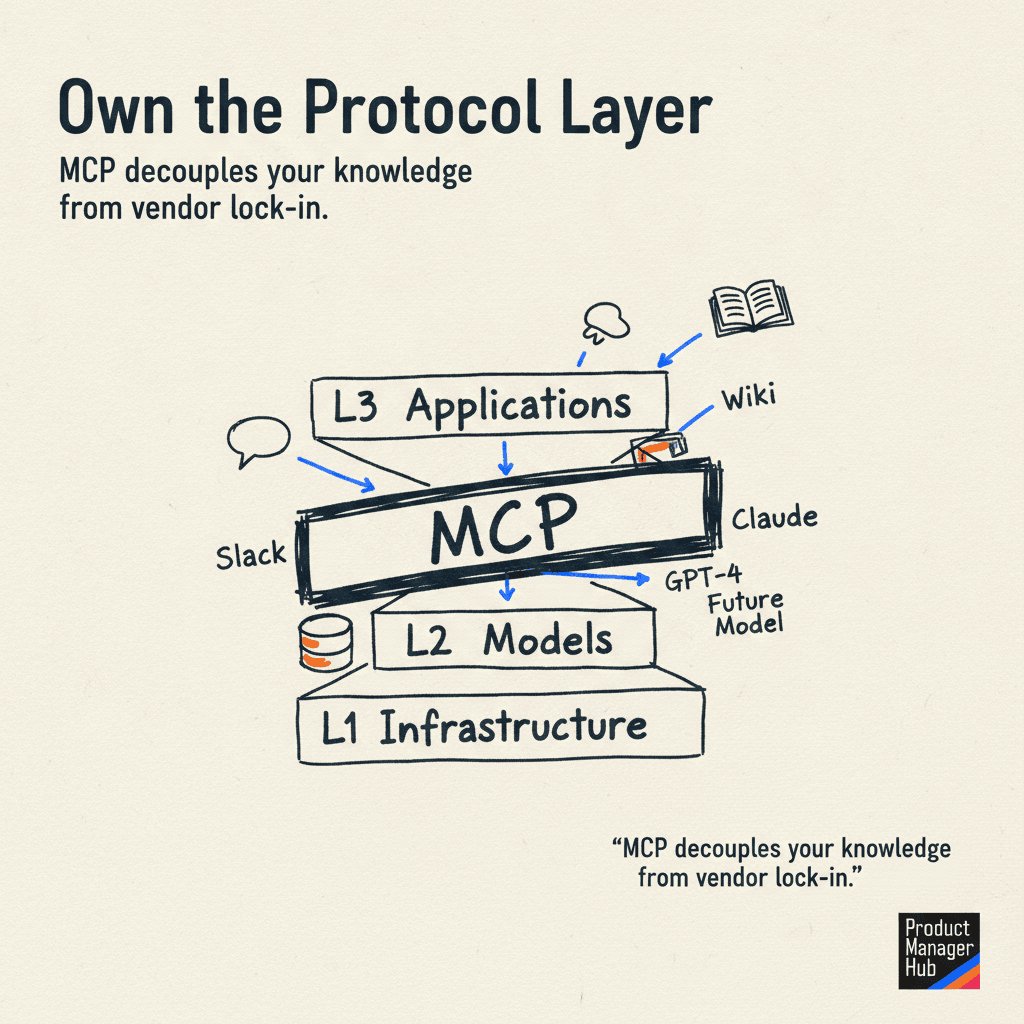
Context ownership. Trust infrastructure. Workflow embedding. These are built, not rented. And they're built in the layers vendors can't access without becoming you.
If this was useful
Share the essay, or follow along where I post the shorter takes.
Go deeper
If this maps to a stall you're in—demo that won't ship, vibe-code without a product, or a team that can't take it—join Access for playbooks and community.